<?xml version="1.0" encoding="utf-8"?><feed xmlns="http://www.w3.org/2005/Atom" ><generator uri="https://jekyllrb.com/" version="4.4.1">Jekyll</generator><link href="https://erinrwhite.com/feed/by_tag/speaking.xml" rel="self" type="application/atom+xml" /><link href="https://erinrwhite.com/" rel="alternate" type="text/html" /><updated>2026-03-05T14:12:20+00:00</updated><id>https://erinrwhite.com/feed/by_tag/speaking.xml</id><title type="html">Erin White</title><entry><title type="html">Trans-inclusive design for the Prosocial Design Network</title><link href="https://erinrwhite.com/trans-inclusive-design-prosocial" rel="alternate" type="text/html" title="Trans-inclusive design for the Prosocial Design Network" /><published>2025-05-13T00:00:00+00:00</published><updated>2025-05-13T00:00:00+00:00</updated><id>https://erinrwhite.com/prosocial</id><content type="html" xml:base="https://erinrwhite.com/trans-inclusive-design-prosocial"><![CDATA[<p>The kind folks at the <a href="https://www.prosocialdesign.org/">Prosocial Design Network</a> asked me to be a guest for April’s “pro-social,” a very low-key virtual gathering for folks interested in creating more inclusive digital spaces.</p>

<p>More about PDN:</p>

<blockquote>
  <p>The Prosocial Design Network connects research to practice toward a world in which online spaces are healthy, productive, respect human dignity, and improve society.</p>
</blockquote>

<p>Here’s their <a href="https://www.prosocialdesign.org/blog/pro-social-on-trans-inclusive-design-a-recap">recap of the event</a>, and a <a href="https://www.youtube.com/watch?v=FenzUfbU0Fo">video of our Q&amp;A segment</a> (15 minutes).</p>

<p>They shared the questions in advance, which I very much appreciated! Here are my prepared notes - we certainly didn’t cover it all during the call.</p>

<h2 id="what-principles-should-be-front-of-mind-in-designing-inclusive-digital-spaces-particularly-social-spaces">What principles should be front of mind in designing inclusive digital spaces, particularly social spaces?</h2>

<p><strong>First off, hire people with different lived experiences from yours.</strong> Hire trans people. Hire Black people. Hire disabled people. Hire disabled Black trans people. Let them cook. Listen to them. Otherwise you are, as my wife says, “Pissing into the wind.”</p>

<p><strong>Prioritize accessibility.</strong> Ensure spaces are accessible for users on many devices, using different device settings, in different contexts in the real world including with assistive technologies. Often accessibility is an afterthought. Shift left and allow it go drive your design and architecture decisions from the jump. For social apps, this includes setting smart defaults - i.e. requiring folks to add alt text if they’re uploading images.</p>

<p><strong>Keep your tech stack light and boring.</strong> Design for a 4-year-old Android phone on a 3g connection, with bandwidth paid for by the megabyte. Bloatware takes longer to load and harms or disincentivizes participation from folks on slower connections or older tech.</p>

<p><strong>Design for trust, privacy and safety.</strong> Design for people to be able to protect their privacy, control what they share and what they see.</p>
<ul>
  <li>Don’t ask for information you don’t need, and tell people why you’re asking for what you do need.</li>
  <li>Make privacy and sharing settings crystal clear.</li>
  <li>Remind folks that no site is 100% secure even if you’re encrypting every bit.</li>
  <li>Provide feedback/reporting mechanisms.</li>
  <li>Allow people to block/opt out of interacting with others or groups, or types of content.</li>
  <li>Don’t overpromise! If you have gaps or areas still under development, name them.</li>
  <li>Have good documentation and support. Don’t leave people wondering what to do.</li>
  <li>Look to successful, intentionally-designed communities - like <a href="https://blog.rudyfraser.com/an-internet-of-many-autonomous-communities/">BlackSky</a> - for cues about designing inclusive, safe spaces.</li>
</ul>

<p><strong>Allow people to define themselves.</strong> The way you do it ain’t the way everybody else does it.</p>
<ul>
  <li>Be aware of <strong>any</strong> type of binary options when it comes to identifying themselves - not just gender, but everything else. Are you technical or nontechnical? Employed or unemployed? Full-time or part-time? In all of these cases it’s not so clear.</li>
  <li>Think in terms of checkboxes, not radios. Tagging, not categorizing.</li>
  <li>Give people freedom in choosing avatars or profile images.</li>
  <li>Give people freedom to change/update usernames and login email addresses without hassle.</li>
  <li>Don’t make inferences about who people are or what they’d like based on their gender, race or other things that they choose to share with you.</li>
  <li>Confront your own ideas about people having one “true identity” - like a real name policy or assuming that everyone has the same interactions with everyone in their lives in every context. We certainly know this is true because 4chan exist(ed) - but let’s also remember that this might be the way that a trans person tries on a new name for the first time.</li>
</ul>

<p>You may have noticed this isn’t necessarily specific to trans-inclusive design. That’s because this is the kind of work that, by considering folks in marginalized positions, benefits everyone. It’s the curb cut effect for accessibility AND privacy AND safety AND inclusion. By focusing our design on the margins we include everyone between them too.</p>
<h2 id="since-you-wrote-your-article-in-2019-what-are-fails-sites-continue-to-make-when-it-comes-to-trans-inclusive-design">Since you wrote your article in 2019, what are fails sites continue to make when it comes to trans inclusive design?</h2>

<p>The biggest fail I continue to see is that folks are asking for gender or sex information at all, because it is usually not needed. It usually means that this data is being brokered into a database somewhere and sold for money.</p>

<p>I don’t need to tell you my gender to book a hotel. Why are you asking for it?</p>

<p>The unnecessary asking for gender gets worse now that we are seeing a rollback of  previous progress in inclusive design we had made in the past few years. We’d been doing so well! The US Web Design system <a href="https://web.archive.org/web/20250123072001/https://designsystem.digital.gov/patterns/create-a-user-profile/gender-identity-and-sex/">had a really thoughtful pattern</a> about asking for gender that was starting to roll out to all these government forms. But now agencies are in the process of <strong>removing</strong> the pattern for asking for gender in an inclusive way, and replacing it with a <a href="https://designsystem.digital.gov/patterns/create-a-user-profile/sex/">binary option for sex</a>.</p>

<p>These design systems changes are in addition to removing all references to being trans from websites, and no longer offering services or information for trans people. It’s a very literal erasure of trans identity. It’s really upsetting, scary, and for trans folks, it’s existential.</p>

<p>I encourage practitioners to plan ahead for the moment when you are asked to do something that you know is wrong. That day will come. What will you say? What will you say no to? What’s your red line?</p>
<h2 id="what-new-concerns-do-you-have-with-ai-and-do-you-have-any-advice-for-tech-folk">What new concerns do you have with AI and do you have any advice for tech folk?</h2>

<p>I have a lot of concerns with AI. I do think there are useful applications for the technology, <strong>and</strong> 99.99% of the applications out there are either actively predatory, passively harmful, gratuitous and mid, or all of the above. And they are <strong>all</strong> harming <a href="https://jacobin.com/2024/06/ai-data-center-energy-usage-environment/">the environment</a> and <a href="https://interestingengineering.com/energy/us-ai-data-center-air-pollution">our health</a>.</p>

<ol>
  <li><strong>Garbage in, garbage out.</strong> AI is pattern recognition. And the patterns it’s trained on are filled with bias! Bias harms people who are in the minority. According to a recent study out of Stanford:
    <blockquote>
      <p>“synthetically generated texts from five of the most pervasive LMs …perpetuate harms of <strong>omission, subordination, and stereotyping</strong> for minoritized individuals with intersectional race, gender, and/or sexual orientation identities.” - <a href="https://arxiv.org/abs/2404.07475">Laissez-Faire Harms: Algorithmic Biases in Generative Language Models (2024)</a></p>
    </blockquote>
  </li>
  <li>
    <p><strong>…and this includes code.</strong> When AI is trained on design patterns or code that is widely popular, but that also includes a lot of code that’s inaccessible or unusable, the resulting code is also inaccessible or unusable. We should also be extremely wary of any AI tool that claims it can <a href="https://www.wethebuilders.org/posts/what-it-really-takes-to-migrate-cobol">refactor a codebase</a> written in a language that most modern coders are not using.</p>
  </li>
  <li>
    <p><strong>AI is a tool of capitalism and state violence.</strong> Generative AI is being used to consolidate, analyze, and generate information in a way that can be used to surveil, prosecute, incarcerate, and <a href="https://en.wikipedia.org/wiki/AI-assisted_targeting_in_the_Gaza_Strip">kill people</a>.</p>
  </li>
  <li>
    <p><strong>AI is seen as a smart humanoid.</strong> People tend to <a href="https://www.nature.com/articles/s41598-021-87480-9">believe algorithms more than each other</a> as task complexity increases - but we also tend to view AI as human-like. We anthropomorphize AI tools by giving them human-like names or designing them as chat prompts (rather than command prompts or even search boxes), which leads us to believe that we are in fact talking with another living being rather than a computer. It also leads some folks to think that <a href="https://www.nytimes.com/2025/04/24/technology/ai-welfare-anthropic-claude.html">AI will become sentient</a>. It won’t, actually, but it will if humans believe that it is, which is perhaps worse.</p>
  </li>
  <li>
    <p><a href="https://www.nytimes.com/2025/03/29/opinion/ai-tech-innovation.html"><strong>AI is mid.</strong></a> And by that, I mean that what it produces is functionally a middle-of-the-road, average, non-“edge case” output. This flattens our differences and creates a “norm” which actually does not exist. Individual people aren’t “normal”, but AI sure likes to tell us that’s a thing, and that really harms people who are far from that norm. Saying that everyone is the same denies the fact that we are all weird as hell. It’s our differences that make us stronger, more creative, better.</p>
  </li>
  <li>
    <p><strong>Critique is painted as fear.</strong> Proponents of AI say that skeptics are “afraid” of AI or don’t understand it. I, for one, am not afraid of it - I’m frustrated by how folks are positioning it as the solution to all our problems. I <strong>do</strong> understand it! I know too much. Dismissing AI detractors as “fearful” allows proponents to dismiss valid critique outright rather than engage with it. It’s a strawman argument.</p>

    <p>If you are AI-critique curious:</p>
    <ul>
      <li><a href="https://www.ajl.org/">Algorithmic Justice League</a></li>
      <li><a href="https://www.dair-institute.org/">Distributed AI Research Institute</a></li>
      <li><a href="https://www.dair-institute.org/maiht3k/">Mystery AI Hype Theater 3000</a></li>
      <li><a href="https://www.characterworks.co/blog/we-deserve-better-than-an-ai-powered-future">We deserve better than an AI-powered future</a></li>
    </ul>
  </li>
</ol>

<h3 id="my-ai-wishlist-for-technologists">My AI wishlist for technologists</h3>

<p><strong>If you don’t need to use AI, don’t.</strong>  Do something else. Turn off default settings that include AI. Switch your search engine to DuckDuckGo and turn off AI features. Turn off Apple intelligence. Turn off Google Gemini. Take a harm-reduction approach to your tech use. (FWIW, this is my approach to eating animal food products. I’m not vegan or even completely vegetarian, but I don’t build my food habits around animal products, which reduces how many animal products I consume.)</p>

<p><strong>Don’t make AI your main thing.</strong> Charles Eames said, “Never delegate understanding.” Don’t rely on AI alone to make decisions about what’s true, certainly not for core parts of your work.</p>

<p><strong>Understand the bias</strong> that ships with your LLM. Do everything you can to critically evaluate outputs for inaccessible, biased or otherwise harmful content. Right-size your models and turn down the “creativity” setting.</p>

<p><strong>Advocate for sustainable, safe AI</strong>, including regulation and environmental mitigation measures. Individual choices get us down the road a piece, but what we really need is to mitigate the impacts at a high level.</p>

<p><strong>Engage your discomfort.</strong> If someone critiques AI and it makes you uncomfortable, listen to understand and be open to changing your mind. Most of the folks who are warning about the harms of AI are minoritized people - Black and brown women, queer and trans people. Believe them!</p>
<h2 id="are-there-any-questions-you-think-researchers-could-help-answer-regarding-trans-inclusive-design">Are there any questions you think researchers could help answer regarding trans-inclusive design?</h2>

<p>This is an excellent question. Some of the things I’d ask folks to understand include…</p>

<p><strong>What are ways we can design for trust and safety?</strong> How can we create digital spaces where people feel safe? What are some of the ways we can foster trustworthiness?</p>

<p><strong>What would trans-informed design look like?</strong> How can we use the very concept of transness - boundary-crossing, liminality, non-binary thinking - to expand our thinking about how technologies can be used, and to what ends?</p>

<p>Oliver Haimson is studying this very thing, and his new book <a href="https://direct.mit.edu/books/oa-monograph/5913/Trans-Technologies">Trans Technologies</a> is available for free, open access, from MIT Press.</p>

<p><strong>How might trans-inclusive digital design change IRL service design?</strong> We’re already seeing this as part of our work in Civic Tech, moving from automation to true digital transformation. We all know that real-world constraints map to technological design choices. How then do we transform the tech stack and use that to change our very service delivery model?</p>]]></content><author><name></name></author><category term="trans" /><category term="ux" /><category term="tech" /><category term="speaking" /><category term="libraries" /><category term="a11y" /><summary type="html"><![CDATA[I joined @prosocialdesign.bsky.social to chat about trans-inclusive design in 2025; how focusing on a11y, optimization, and trust+safety make for more inclusive products; and how tech folks should be approaching AI.]]></summary></entry><entry><title type="html">Code4Lib 2021 lightning talk: Planning for the most; or, a bellwether speaks</title><link href="https://erinrwhite.com/planning-for-the-most/" rel="alternate" type="text/html" title="Code4Lib 2021 lightning talk: Planning for the most; or, a bellwether speaks" /><published>2023-01-20T21:55:29+00:00</published><updated>2023-01-20T21:55:29+00:00</updated><id>https://erinrwhite.com/planning-for-the-most</id><content type="html" xml:base="https://erinrwhite.com/planning-for-the-most/"><![CDATA[<p>I gave this 5-minute talk almost two years ago at Code4Lib 2021, but hadn’t yet shared it here. <a href="http://dx.doi.org/10.17605/OSF.IO/92P38">Slides are available through OSF</a>; text is below. I’m no longer working at VCU, or in libraries, but wanted to share the talk here because this is something I continue to think about. Thanks for reading.</p>

<h2 id="planning-for-the-most-or-a-bellwether-speaks">Planning for the most; or, a bellwether speaks</h2>

<h3 id="hi-folks">Hi folks,</h3>

<p>…just a visit from your future, here. I’m the ram with the bell around its neck.</p>

<p>I’m Erin White. This is my 11th Code4Lib!</p>

<p>I’m head of digital engagement at VCU Libraries in Richmond, VA.</p>

<p>I’m also the interim digital collections librarian<br />
…for the past five years or so.</p>

<h3 id="interim-math">Interim math</h3>

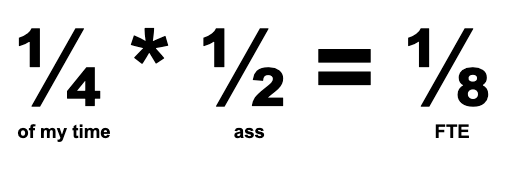
<p><img src="/assets//2013-2024/2022/06/Bellwether-2-Interim-math.png" alt="Interim math: 1/4 of my time times 1/2 of my ass equals one eighth of a full time person" /></p>

<p>Shoutout to everyone who’s holding an interim appointment or who has absorbed a vacancy in your area. I know many of y’all have been doing this math too. The past year in particular brought so much hardship across all vectors of our lives, and at work that likely included layoffs, retirements, health-related departures, and other stark changes.</p>

<p>I’m in a relatively <strong>good</strong> position – I get to say how much of this work has to get done. Still, it turns out half-assing a job for a quarter of my time means projects move really slowly or not at all. <em>[2023 editor’s note: “half-assing” was sarcastically used here to mean, “Learning how to do a job I had not done before.” A reminder that we need to be kind to ourselves and others when we take on new roles!]</em></p>

<h3 id="where-were-headed">Where we’re headed</h3>

<p>I’m not sharing this with you to complain. It’s not an indictment of my employer. I share it because I think this is where we’re headed.</p>

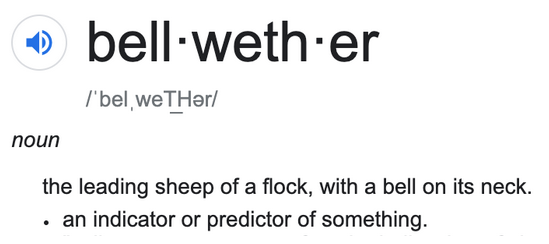
<p><img src="/assets//2013-2024//2022/06/Bellwether-3-definition.png" alt="Definition of bellwether: the leading sheep of a flock with a bell around its neck; or, an indicator or predictor of something" /></p>

<p>The early 2000s were a boom time for mass digitization and library investment in digital collections. It was a time of huge growth and excitement in digital libraries.</p>

<p>But, y’all, library budgets are not getting bigger. It’s not that we’re temporarily in tough times. This is how things are and will be. It sure seems to me that digital collections work, and other types of important but invisibilized work in the library, will continue to be deprioritized when budget conversations inevitably get tough. <em>[2023 editor’s note: All this in a broader U.S. political and fiscal climate increasingly hostile to higher ed, libraries, and cultural heritage institutions.]</em></p>

<p>I won’t tell you not to hope, and fight, for the best.</p>

<p>I will tell you to plan for the worst. Or rather, to plan for the most. ‘Cause this is where most of us are heading. And it’s not necessarily the worst. <strong>It’s just different.</strong></p>

<h3 id="the-last-mile-problem">The last mile problem</h3>

<p>There are a lot of ripple effects of disinvestment that I could talk about, but I only have a few minutes, so I’ll talk about the ones that haunt me most. 🙂</p>

<p>At Code4Lib 2014 <a href="https://www.harihareswara.net/">Sumana Harihareswara</a> gave <a href="https://wiki.code4lib.org/2014_Keynote_by_Sumana_Harihareswara">a keynote</a> that I still think about.</p>

<p>She talked about the <a href="https://en.wikipedia.org/wiki/Last_mile_(transportation)">last mile problem</a>: the “largest hurdle we face in making things usable.” She gave many good examples and even wrote it up into <a href="https://journal.code4lib.org/articles/10482">a C4L journal article</a>.</p>

<p>The bottom line is that many people don’t use services, even ones that are “best” for them, because they’re simply not usable.</p>

<h3 id="the-most-beautiful-bus-stop">The most beautiful bus stop</h3>

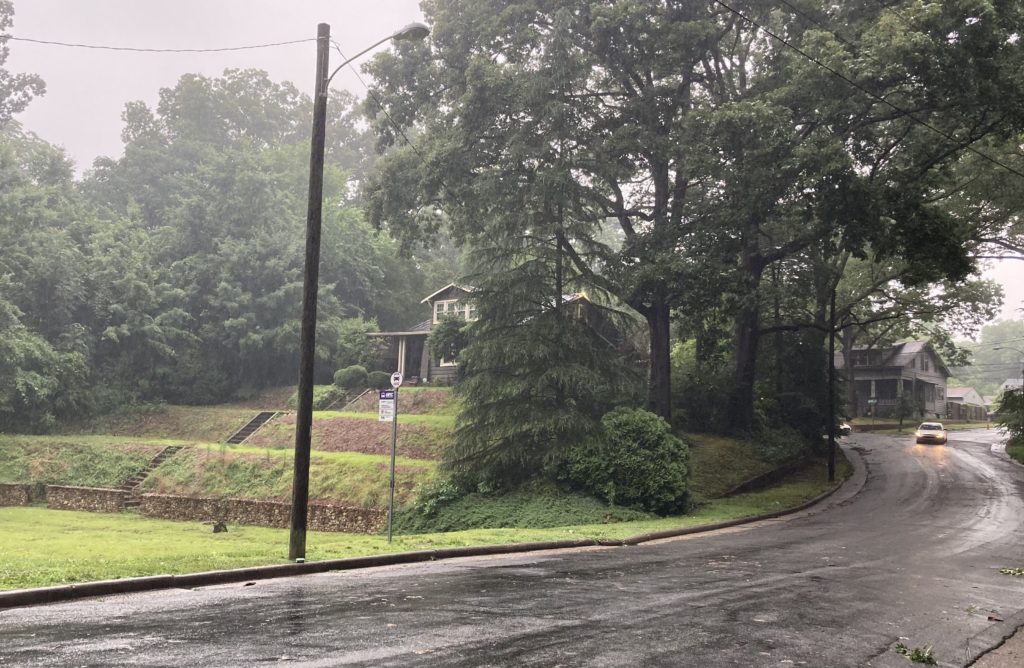
<p><img src="/assets//2013-2024//2022/06/Bellwether-5-beautiful-bus-stop-1024x668.jpg" alt="Photo of a wet road going down a hill next to a beautiful terraced lawn. A tiny bus stop sign stands next to a power pole." /></p>

<div class="language-plaintext highlighter-rouge"><div class="highlight"><pre class="highlight"><code>Here is a picture of the most beautiful bus stop in Richmond, VA. It’s my bus stop.
</code></pre></div></div>

<p><em>[2023 editor’s note: original slide text noted that there is no sidewalk, no bench, no shelter, and the stop is only serviced (unreliably) once per hour. This is still true.]</em></p>

<p>While this bus stop has the loveliest views, it has zero amenities. It’s inaccessible for many of my neighbors. And it only works well for me because I have a smartphone to check in on bus status, I have flexibility on what time I can arrive at my job, and I can walk quickly down a road with no sidewalk, dodging traffic, to catch a ride. If any of those things were to become untrue, or when the weather goes south, I can’t use the service easily.</p>

<p>This example is the very literal definition of the last mile problem.</p>

<h3 id="the-most-beautiful-workflows">The most beautiful workflows</h3>

<p>One of the ways the last mile problem has manifested in my work-life has been that, even after a year and a half of using Islandora for our digital collections, we still haven’t figured out a workflow to batch-upload collections. We have added only <strong>one</strong> item to our digital collections since fall 2019.</p>

<p>First of all, as I said a few slides back, this is a result of disinvestment in libraries as a whole. Like many departments in our library, we’ve had a vacant position for years.</p>

<p>This is also a documentation problem. To get our process sorted out we’ve been hanging on every word of this <a href="https://web.archive.org/web/20200203174629/https://digitalscholarship.utsc.utoronto.ca/content/blogs/converting-spreadsheets-modsxml-using-open-refine">7-year-old blog post that’s only accessible through the Wayback Machine</a>.</p>

<p>This is also, fundamentally, a last-mile problem. This upload process was designed assuming every institution had people with scripting expertise and, more importantly, <em>time</em> to design, code, and troubleshoot each bulk upload.</p>

<h3 id="it-feels-personal-its-not">It feels personal. It’s not.</h3>

<p>I am actually ashamed to admit this. I feel this failure in my body. I know that if I carved out two solid days I could probably get something working, right? It seems so fundamental! It should be simple. If I just tried harder. If I just had more time.</p>

<p>But this isn’t about me. This isn’t really about Islandora either. (BIG love and gratitude to the community of maintainers for Islandora. I know a lot of this is different in version 8. Again, this isn’t about Islandora.)</p>

<p>This is about beautiful bus stops that only a few people in good circumstances can use. We can and must design more usable things for each other.</p>

<h3 id="planning-for-the-most">Planning for the most</h3>

<ul>
  <li>Design for the margins</li>
  <li>Design for use</li>
  <li>Assume nothing</li>
  <li>Collaborate &amp; de-silo</li>
  <li>Define innovation as a social process rather than a technical one</li>
</ul>

<p>So I ask you to think of this. <strong>How can we adjust the angle of our vision?</strong> To set our sights on each other instead of the distant horizon of another cutting-edge revolutionary technology that’ll solve all our problems?</p>

<p>What if instead of thinking of this as “planning for the worst” we see it instead as “planning for the most”? Because most of us are pressed for time, for money, for the brain cells to rub together to create new workflows.</p>

<p>By designing for needs of institutions that have fewer resources, we can design for everybody. Because the center is NOT holding. The dividing line between have- and have-not institutions is only getting stronger, with fewer in between.</p>

<p>Cultural heritage organizations must continue to become interdependent with each other as time goes along. Consortial, collectively-held platforms and communities are the way we need to go. Code4Lib itself is a model of how this can work. We can make this work!</p>

<p>So consider this an invitation.</p>

<p>Let’s keep building the future we need, together.</p>

<hr />

<h2 id="postscript">Postscript</h2>

<p>This talk was inspired by all of my amazing colleagues doing library tech and digital collections work, and by the book <a href="https://design-justice.pubpub.org/">Design Justice</a> by Sasha Costanza-Chock. Thank you to Drew Heles at LYRASIS who reached out last year about this presentation and inspired me to post it.</p>

<p>When I gave this talk in March 2021, I got some feedback that it was too gloomy. After 13 years in the field, and well over a year after giving this talk, I stick by it. My takeaway is actually not gloomy at all; it’s hopeful. I believe we can have proactive new visions for the future instead of waiting for things to improve. No way out but through, no way through but together.</p>

<p>In the time since this talk I have left libraries and moved to a new city. My (former) institution is currently hiring a digital collections librarian.</p>

<p>Thanks again for reading.</p>]]></content><author><name>erinrwhite</name></author><category term="conferences" /><category term="speaking" /><category term="libraries" /><category term="richmond" /><category term="tech" /><summary type="html"><![CDATA[I gave this 5-minute talk almost two years ago at Code4Lib 2021, but hadn’t yet shared it here. Slides are available through OSF; text is below. I’m no longer working at VCU, or in libraries, but wanted to share the talk here because this is something I continue to think about. Thanks for reading.]]></summary></entry><entry><title type="html">Talk: Using light from the dumpster fire to illuminate a more just digital world</title><link href="https://erinrwhite.com/talk-using-light-from-the-dumpster-fire-to-illuminate-a-more-just-digital-world/" rel="alternate" type="text/html" title="Talk: Using light from the dumpster fire to illuminate a more just digital world" /><published>2021-04-16T14:27:12+00:00</published><updated>2021-04-16T14:27:12+00:00</updated><id>https://erinrwhite.com/talk-using-light-from-the-dumpster-fire-to-illuminate-a-more-just-digital-world</id><content type="html" xml:base="https://erinrwhite.com/talk-using-light-from-the-dumpster-fire-to-illuminate-a-more-just-digital-world/"><![CDATA[<p>This February I gave a lightning talk for the <a href="https://www.instagram.com/rvadsgn/">Richmond Design Group</a>. My question: what if we use the light from the dumpster fire of 2020 to see an equitable, just digital world? How can we change our thinking to build the future web we need?</p>

<hr />

<p>Hi everybody, I’m Erin. Before I get started I want to say thank you to the RVA Design Group organizers. This is hard work and some folks have been doing it for YEARS. Thank you to the organizers of this group for doing this work and for inviting me to speak.</p>

<p>This talk isn’t about 2020. This talk is about the future. But to understand the future, we gotta look back.</p>

<h2 id="the-web-in-1996">The web in 1996</h2>

<p>Travel with me to 1996. Twenty-five years ago!</p>

<p>I want to transport us back to the mindset of the early web. The fundamental idea of hyperlinks, which we now take for granted, really twisted everyone’s noodles. So much of the promise of the early web was that with broad access to publish in hypertext, the opportunities were limitless. Technologists saw the web as an equalizing space where systems of oppression that exist in the real world wouldn’t matter, and that we’d all be equal and free from prejudice. Nice idea, right?</p>

<p>You don’t need to’ve been around since 1996 to know that’s just not the way things have gone down.</p>

<p>Pictured before you are some of the <a href="https://mashable.com/2010/07/04/web-founding-fathers/">early web pioneers</a>. Notice a pattern here?</p>

<p>These early visions of the web, including <a href="https://www.eff.org/cyberspace-independence">Barlow’s declaration of independence of cyberspace</a>, while inspiring and exciting, were crafted by the same types of folks who wrote the actual declaration of independence: the landed gentry, white men with privilege. Their vision for the web echoed the declaration of independence’s authors’ attempts to describe the world they envisioned. And what followed was the inevitable conflict with reality.</p>

<p>We all now hold these truths to be self-evident:</p>

<ul>
  <li>The systems humans build reflect humans’ biases and prejudices.</li>
  <li>We continue to struggle to diversify the technology industry.</li>
  <li>Knowledge is interest-driven.</li>
  <li>Inequality exists, online and off.</li>
  <li>Celebrating, rather than diminishing, folks’ intersecting identities is vital to human flourishing.</li>
</ul>

<h2 id="the-web-we-have-known">The web we have known</h2>

<blockquote>
  <p><strong>Profit first:</strong> monetization, ads, the funnel, dark patterns<br />
<strong>Can we?:</strong> Innovation for innovation’s sake<br />
<strong>Solutionism:</strong> code will save us<br />
<strong>Visual design:</strong> aesthetics over usability<br />
<strong>Lone genius:</strong> “hard” skills and rock star coders<br />
<strong>Short term thinking:</strong> move fast, break stuff<br />
<strong>Shipping:</strong> new features, forsaking infrastructure</p>
</blockquote>

<p>Let’s move forward quickly through the past 25 years or so of the web, of digital design.</p>

<p>All of the web we know today has been shaped in some way by intersecting matrices of domination: colonialism, capitalism, white supremacy, patriarchy. (Thank you, <a href="https://opinionator.blogs.nytimes.com/2015/12/10/bell-hooks-buddhism-the-beats-and-loving-blackness/">bell hooks</a>.)</p>

<p>The digital worlds where we spend our time – and that we build!! – exist in this way.</p>

<p>This is not an indictment of anyone’s individual work, so please don’t take it personally. What I’m talking about here is the digital milieu where we live our lives.</p>

<p>The funnel drives everything. Folks who work in nonprofits and public entities often tie ourselves in knots to retrofit our use cases in order to use common web tools (google analytics, anyone?)</p>

<p>In chasing innovation™ we often overlook important infrastructure work, and devalue work — like web accessibility, truly user-centered design, care work, documentation, customer support <strong>and even care for ourselves and our teams</strong> — that doesn’t drive the bottom line. We frequently write checks for our future selves to cash, knowing damn well that we’ll keep burying ourselves in technical debt. That’s some tough stuff for us to carry with us every day.</p>

<p>The “move fast” mentality has resulted in explosive growth, but at what cost? And in creating urgency where it doesn’t need to exist, focusing on new things rather than repair, the end result is that we’re building a house of cards. And we’re exhausted.</p>

<p>To zoom way out, this is another manifestation of late capitalism. Emphasis on LATE. Because…2020 happened.</p>

<h2 id="what-2020-taught-us">What 2020 taught us</h2>

<blockquote>
  <p>Hard times amplify existing inequalities<br />
Cutting corners mortgages our future<br />
Infrastructure is essential<br />
“Colorblind”/color-evasive policy doesn’t cut it<br />
Inclusive design is vital<br />
We have a duty to each other<br />
Technology is only one piece<br />
<strong>Together, we rise</strong></p>
</blockquote>

<p>The past year has been awful for pretty much everybody.</p>

<p>But what the light from this dumpster fire has illuminated is that <strong>things have actually been awful for a lot of people, for a long time</strong>. This year has shown us how perilous it is to avoid important infrastructure work and to pursue innovation over access. It’s also shown us that what is sometimes referred to as colorblindness — I use the term color-evasiveness because it is not ableist and it is more accurate — a color-evasive approach that assumes everyone’s needs are the same in fact leaves people out, especially folks who need the most support.</p>

<p>We’ve learned that technology is a crucial tool and that it’s just one thing that keeps us connected to each other as humans.</p>

<p>Finally, we’ve learned that if we work together we can actually make shit happen, despite a world that tells us individual action is meaningless. Like biscuits in a pan, when we connect, we rise together.</p>

<p>Marginalized folks have been saying this shit for years.<br />
More of us than ever see these things now.<br />
And now we can’t, and shouldn’t, unsee it.</p>

<h1 id="the-web-we-can-build-together">The web we can build together</h1>

<blockquote>
  <p>Current state:<br />
– Profit first<br />
– Can we?<br />
– Solutionism<br />
– Aesthetics<br />
– “Hard” skills<br />
– Rockstar coders<br />
– Short term thinking<br />
– Shipping</p>

  <p>Future state:<br />
– People first: security, privacy, inclusion<br />
– Should we?<br />
– Holistic design<br />
– Accessibility<br />
– Soft skills<br />
– Teams<br />
– Long term thinking<br />
– Sustaining</p>
</blockquote>

<p>So let’s talk about the future. I told you this would be a talk about the future.</p>

<p>Like many of y’all I have had a very hard time this year thinking about the future at all. It’s hard to make plans. It’s hard to know what the next few weeks, months, years will look like. And who will be there to see it with us.</p>

<p>But sometimes, when I can think clearly about something besides just making it through every day, I wonder.</p>

<p>What does a people-first digital world look like? Who’s been missing this whole time?</p>

<p>Just because we can do something, does it mean we should?</p>

<p>Will technology actually solve this problem? Are we even defining the problem correctly?</p>

<p>What does it mean to design knowing that even “able-bodied” folks are only temporarily so? And that our products need to be used, by humans, in various contexts and emotional states?</p>

<p>(There are also false binaries here: aesthetics vs. accessibility; abled and disabled; binaries are dangerous!)</p>

<p>How can we nourish our collaborations with each other, with our teams, with our users? And focus on the wisdom of the folks in the room rather than assigning individuals as heroes?</p>

<p>How can we build for maintenance and repair? How do we stop writing checks our future selves to cash – with interest?</p>

<p>Some of this here, I am speaking of as a web user and a web creator. I’ve only ever worked in the public sector. When I talk with folks working in the private sector I always do some amount of translating. At the end of the day, we’re solving many of the same problems.</p>

<p>But what can private-sector workers learn from folks who come from a public-sector organization?</p>

<p>And, as we think about what we build online, how can we also apply that thinking to our real-life communities? What is our role in shaping the public conversation around the use of technologies? I offer a few ideas here, but don’t want them to limit your thinking.</p>

<h2 id="consider-the-public-sector">Consider the public sector</h2>

<blockquote>
  <p>Here’s a thread about public service. ⚖️🏛️ 💪🏼💻🇺🇸</p>

  <p>— Dana Chisnell (she / her) (@danachis) <a href="https://twitter.com/danachis/status/1357835164118876161?ref_src=twsrc%5Etfw">February 5, 2021</a></p>
</blockquote>

<p>I don’t have a ton of time left today. I wanted to talk about public service like the very excellent Dana Chisnell here.</p>

<p>Like I said, I’ve worked in the public sector, in higher ed, for a long time. It’s my bread and butter. It’s weird, it’s hard, it’s great.</p>

<p>There’s a lot of work to be done, and it ain’t happening at civic hackathons or from external contractors. The call needs to come from inside the house.</p>

<h3 id="working-in-the-public-sector">Working in the public sector</h3>

<blockquote>
  <p>Government should be<br />
– inclusive of all people<br />
– responsive to needs of the people<br />
– effective in its duties &amp; purpose</p>

  <p>— Dana Chisnell (she / her) (@danachis) <a href="https://twitter.com/danachis/status/1357835374324760576?ref_src=twsrc%5Etfw">February 5, 2021</a></p>
</blockquote>

<p>I want you to consider for a minute how many folks are working in the public sector right now, and how technical expertise — especially in-house expertise — is something that is desperately needed.</p>

<p>Pictured here are the <a href="http://richmondgov.com/">old website</a> and <a href="https://www.rva.gov/">new website</a> for the city of Richmond. I have a whole ‘nother talk about that new Richmond website. I FOIA’d the contracts for this website. There are 112 accessibility errors on the homepage alone. It’s been in development for 3 years and still isn’t in full production.</p>

<p>Bottom line, good government work matters, and it’s hard to find. Important work is put out for the lowest bidder and often external agencies don’t get it right. What would it look like to have that expertise in-house?</p>

<h3 id="influencing-technology-policy">Influencing technology policy</h3>

<p>We also desperately need lawmakers and citizens who understand technology and ask important questions about ethics and human impact of systems decisions.</p>

<p>Pictured here are some headlines as well as a contract from the City of Richmond. Y’all know <a href="https://www.muckrock.com/foi/richmond-151/soma-global-rpd-contract-71482/">we spent $1.5 million on a predictive policing system</a> that will <a href="https://www.technologyreview.com/2020/07/17/1005396/predictive-policing-algorithms-racist-dismantled-machine-learning-bias-criminal-justice/">disproportionately harm citizens of color</a>? And that earlier this month, City Council voted to <a href="https://www.wtvr.com/news/local-news/vcu-police-to-join-rpds-records-system">allow Richmond and VCU PD’s to start sharing their data</a> in that system?</p>

<p>The surveillance state abides. Technology facilitates.</p>

<p>I dare say these technologies are designed to bank on the fact that <a href="https://medium.com/s/story/mocking-congress-wont-make-it-tech-literate-21a2c3208d3e">lawmakers don’t know what they’re looking at</a>.</p>

<p>My theory is, in addition to holding deep prejudices, lawmakers are also deeply baffled by technology. The hard questions aren’t being asked, or they’re coming too late, and they’re coming from citizens who have to <a href="https://www.nbc12.com/2019/04/04/group-raises-concern-over-rpds-record-management-system/">put themselves in harm’s way</a> to do so.</p>

<p>Technophobia is another harmful element that’s emerged in the past decades. What would a world look like where technology is not a thing to shrug off as un-understandable, but is instead deftly co-designed to meet our needs, rather than licensed to our city for 1.5 million dollars? What if everyone knew that technology is not neutral?</p>

<h2 id="closing">Closing</h2>

<p>This is some of the future I can see. I hope that it’s sparked new thoughts for you.</p>

<p>Let’s envision a future together. What has the light illuminated for you?</p>

<p>Thank you!</p>]]></content><author><name>erinrwhite</name></author><category term="civic-tech" /><category term="libraries" /><category term="richmond" /><category term="speaking" /><summary type="html"><![CDATA[This February I gave a lightning talk for the Richmond Design Group. My question: what if we use the light from the dumpster fire of 2020 to see an equitable, just digital world? How can we change our thinking to build the future web we need?]]></summary></entry><entry><title type="html">Podcast interview: Names, binaries and trans-affirming systems on Legacy Code Rocks!</title><link href="https://erinrwhite.com/podcast-interview-names-binaries-and-trans-affirming-systems-on-legacy-code-rocks/" rel="alternate" type="text/html" title="Podcast interview: Names, binaries and trans-affirming systems on Legacy Code Rocks!" /><published>2021-03-31T21:38:50+00:00</published><updated>2021-03-31T21:38:50+00:00</updated><id>https://erinrwhite.com/podcast-interview-names-binaries-and-trans-affirming-systems-on-legacy-code-rocks</id><content type="html" xml:base="https://erinrwhite.com/podcast-interview-names-binaries-and-trans-affirming-systems-on-legacy-code-rocks/"><![CDATA[<p>In February I was honored to be invited to join Scott Ford on his podcast <a href="https://www.legacycode.rocks/episodes/93/">Legacy Code Rocks!</a>. I’m embedding the audio below. <a href="https://docs.google.com/document/d/e/2PACX-1vSD3JAZVDuYSbhQASCdUwAzBx1XDlzvWWi01rPOl7Qt_IdZCNRrNnGdinwtv4MA2vlTvqdo1GYg4Zwj/pub">View the full episode transcript</a> — thanks to trans-owned <a href="https://www.facebook.com/DeepSouthTranscriptionServices">Deep South Transcription Services</a>!</p>

<p>I’ve pulled out some of the topics we discussed and heavily edited/rearranged them for clarity.</p>

<h2 id="names-in-systems">Names in systems</h2>

<h3 id="legal-name-vs-name-of-use">Legal name vs. name of use</h3>

<p>Let’s think about Facebook’s former <a href="https://www.cbc.ca/news/technology/facebook-real-names-1.3367403#:~:text=Facebook%20requires%20people%20to%20%22provide,who%20they're%20connecting%20with.&amp;text=When%20the%20company%20receives%20a,such%20as%20a%20driver's%20licence.">Real name policy</a>. Early on Mark Zuckerberg even said that having two names showed a <a href="https://michaelzimmer.org/2010/05/14/facebooks-zuckerberg-having-two-identities-for-yourself-is-an-example-of-a-lack-of-integrity/">lack of integrity</a>.</p>

<p>The underlying assumption was that there’s one name that everybody always uses, and only people with malicious intend would do anything different. The notion that people are using different identities to “trick” others is also a common, harmful <a href="https://www.vox.com/identities/2016/5/13/17938090/transgender-people-tricks-confused">trope used to demonize and discredit trans people</a>.</p>

<p>We now widely acknowledge that people are called different names in different circumstances either because of familial or professional relationships, different eras of their lives, different contexts, or because of a change in their gender identity.</p>

<p>People’s <strong>legal names</strong> may stay the same, but their <strong>names of use</strong> vary. That was the thing that got me thinking about trans-affirming systems design.</p>

<p>What would a world look like where trans folks actually see themselves in systems rather than simply accommodated? What if if they truly were affirmed and celebrated?</p>

<p>One way to do that is to allow people to say what their names are. There are very few contexts when we actually need folks’ full legal first names.</p>

<h3 id="not-edge-cases">Not “edge cases”</h3>

<p>Allowing for name flexibility is an example of a technology that helps a lot of different people. For example, of the 140 people on staff at our library, about a third of us are using names that are different from our full legal first name. People are going by middle names or by more familiar versions of first names, like Jimmy instead of James; or are using totally different names. While some people would see an errant name field as a minor annoyance, for other folks it’s a safety issue. It’s one change that’s a big quality of life increase for a lot of folks.</p>

<h2 id="binaries">Binaries</h2>

<p>Then there’s the gender binary. Computers run on binaries. As technologists we love the idea of ones and zeros, simplifying things when possible: off/on, yes/no; and frequently we do that with gender too. You’ve got a form asking for gender (typically unnecessarily) and there’s only two options.</p>

<h3 id="gendered-stereotypes-serve-no-one">Gendered stereotypes serve no one</h3>

<p>We know full well that when we provide gender data it is often used to sell us things based gender stereotypes. When systems are actively reinforcing the gender binary, the result is reductive and uninspiring, and something that doesn’t reflect the lived gender experience of most people, whether they are trans or not.</p>

<h3 id="transcis-binary">Trans/cis binary</h3>

<p>Another gender-related binary: either you’re trans or you’re cis. That’s a false binary. People’s gender identities change throughout their lives. There’s valid expressions of gender identity that are neither/nor, that are both/and, so to create that wall between trans and cis is really harmful for all, and cashes out as violence against people who don’t conform.</p>

<p>So many trans people I know don’t think they are “trans enough.” And so many cis people spend so much time trying to prove that they are manly or womanly enough. It’s exhausting.</p>

<h3 id="everybody-has-a-gender">Everybody has a gender</h3>

<p>It’s important for folks who identify as cisgender to to think about and question their genders. You have gender(s)!</p>

<p>Ask yourself, How does my gender impact how I move through the world? How does it impact how I interact with people, and how I present myself, how I dress? It’s not just trans people that should be thinking about this. Just reflect on what your gender is, and how you do it. There’s so much richness there, even within within the cisgender and transgender buckets, there’s just so much.</p>

<h3 id="binaries-create-inequalities">Binaries create inequalities</h3>

<p>Binaries in themselves can be violent. As humans, we categorize things as a survival mechanism so that we don’t have to spend all our energy processing every single sensory input.</p>

<p>At the same time, when we have categories that pit things against each other with a clear delineating line between, those differentiations create inequality.</p>

<p>One harmful binary at the root of American culture: either you’re white or you’re not, and you’re less than. The foundation of the U.S. is the exploitation and oppression of nonwhite people, Black and brown people. In technology, a binary might be “technical” and “non-technical” people. Those types of less-than/greater-than binaries occur across identities and sectors including gender.</p>

<p>Once you start to perceive all the binaries you can’t unsee them. Understanding how detrimental they are helps us understand how the systems we build can reject them and instead reflect the rich bouquet of lived human experience.</p>

<h2 id="making-trans-affirming-systems">Making trans-affirming systems</h2>

<p><strong>Audit how how names are handled.</strong> Do you require a legal name for anything? If not, let people choose their name, let people update it. Does that name cascade to their username? Are they able to change a username? If I signed up 10 years ago and now I need to change my username, I want to bring over my entire history, am I able to do that?</p>

<p><strong>Follow that up with a gender audit</strong>. Are you asking for gender anywhere? Why do you actually need it? Are you asking for people to indicate gender or a title? Add the gender-inclusive Mx. to the honorifics field and if possible make it optional because some folks are just not into it.</p>

<p><strong>Images.</strong> If you’re using stock photography or other images on your site, do they represent diversity of lived experiences? Do you have folks who are not white, who are not young, who are disabled, who maybe aren’t conventionally gender presenting? Folks dressed in different types of clothing or with different gender presentation? There’s a few different open photo libraries on the web — the broadly gender spectrum collection comes to mind.</p>

<p><strong>Content.</strong> Think about the the content of the web and how users are communicated with in the language that we use. Singular “they” instead of “he or she.”</p>

<p>More on my A List Apart article, <a href="https://alistapart.com/article/trans-inclusive-design">Trans-inclusive design</a>.</p>

<h2 id="closing">Closing</h2>

<p>I recently read <a href="https://design-justice.pubpub.org/">Design Justice</a> and can’t recommend it highly enough. Constant learning is our life’s work. We can’t stay stagnant. We have to keep pushing ourselves, talking to people, and making sure that what we’re building is something that’s going to serve everybody.</p>]]></content><author><name>erinrwhite</name></author><category term="speaking" /><category term="libraries" /><category term="tech" /><category term="ux" /><category term="trans" /><summary type="html"><![CDATA[In February I was honored to be invited to join Scott Ford on his podcast Legacy Code Rocks!. I’m embedding the audio below. View the full episode transcript — thanks to trans-owned Deep South Transcription Services!]]></summary></entry></feed>